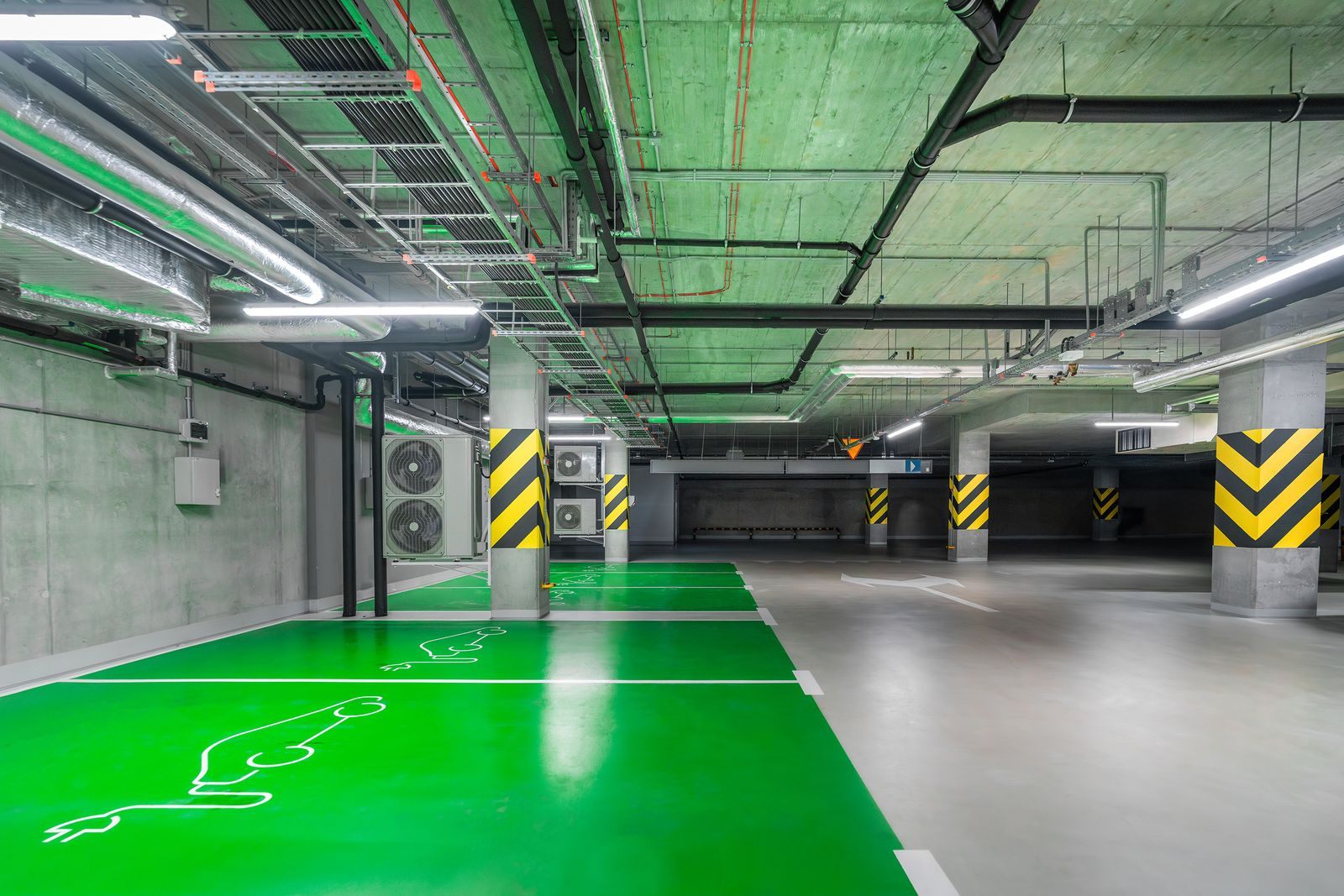
Wireless Electric Vehicle Charging
Park over a pad and charge: how it works and where the standard stands.
View SAE J2954The same principle that charges a phone on a pad can charge an electric car parked over a pad. The coils are bigger, the gap is larger and the power is far higher, which is why the auto industry needed its own standard. Here is how wireless EV charging works and where it stands.
How a Wireless EV Charging Station Works
A ground pad is installed on or in the floor of a parking space and connected to the electrical supply through its own control box. A matching vehicle pad is mounted under the car. When the driver parks over the ground pad, the two communicate, confirm alignment, and the ground pad energizes, transferring power across the air gap by magnetic resonance. The car’s onboard electronics convert it and charge the battery, and charging stops if anything goes wrong.
Convenience is the main appeal: no cable to handle in rain or snow, no plug to wear out, and potential for automated parking and fleet vehicles such as buses and taxis to top up during stops.
The SAE J2954 Standard
SAE J2954, from SAE International, is the main U.S. standard for wireless power transfer to light-duty plug-in and electric vehicles. Its current edition (2024) covers stationary charging and defines:
- Power classes up to 11 kW, comparable to home Level 2 AC charging.
- Ground-clearance classes so pads work with vehicles that ride at different heights.
- Interoperability so a ground pad from one maker can charge a vehicle pad from another.
- An alignment method that uses low-power magnetic signals so the car can guide the driver, or an automated parking system, into position.
Separate SAE documents address heavy-duty vehicles and dynamic (in-motion) charging, which is still being developed. The U.S. Department of Energy’s Vehicle Technologies Office has funded research on wireless and high-power charging for vehicles.
Safety and Practical Questions
- Foreign objects: systems are designed to detect metal objects and living things in the field area and shut down or reduce power.
- Exposure: the field is concentrated between the pads under the car, and designs must meet exposure limits for people nearby.
- Efficiency: well-aligned systems can be efficient, but some energy is always lost as heat compared with a cable.
- Installation: a ground pad needs a dedicated circuit and a licensed electrician, just like a plug-in home charger.
Wireless EV Charging Questions
Can I buy wireless charging for my electric car today?
Wireless charging for cars has been demonstrated and offered in limited ways, but it is far less common than plug-in charging. Check with your vehicle maker before considering any aftermarket system, because the car needs a matching receiver pad.
Is wireless EV charging as fast as a home wall charger?
The SAE J2954 power classes are in the same range as home Level 2 AC charging. It is not a replacement for high-power DC fast charging on road trips.
Can roads charge cars while they drive?
Dynamic, in-motion wireless charging has been tested on pilot roadways and is the subject of a separate SAE document still under development. It is not in everyday use.
Read the Standard’s Summary
SAE International publishes the scope of J2954, the standard for wireless charging of light-duty electric vehicles.
View SAE J2954